
What Is the Kingdom of Heaven? Lessons from the Parables of Matthew 13
What Did Jesus Mean When He Said "The Kingdom of Heaven Is Like..."?
Each of the short parables in Matthew 13 begins with the same phrase: "The kingdom of heaven is like." These are similes, not metaphors. Jesus was not saying the kingdom of heaven is a mustard seed or a piece of yeast. He was saying it resembles these things in important ways.
Understanding this distinction matters. Jesus was painting a picture, not giving a definition. He was inviting His listeners to see something invisible through something visible.
The Kingdom of Heaven Is Not only a Place
When many people hear "kingdom of heaven," they picture clouds, angels, and a distant destination. But what Jesus described in Matthew 13 is a way of life. It is a community. It is something that begins now, in the present, through relationship with Him.
From the very beginning of His ministry, Jesus announced, "The kingdom of heaven is at hand." It arrived in the Incarnation at Christmas! On a dark night, light broke in! And it began growing, quietly and small, from that moment forward.
The Parable of the Mustard Seed: How Does Faith Start?
Speaking of…a mustard seed is remarkably small. Jesus chose this image deliberately. The kingdom of heaven can begin with something so tiny that you might not even notice it at first.
For many people, faith begins at a kitchen table. It begins watching a parent or grandparent pray. It begins spending a week at a friend's house and seeing a family sit down together in the morning to read Scripture. Small moments. Quiet rhythms. Tiny seeds!!
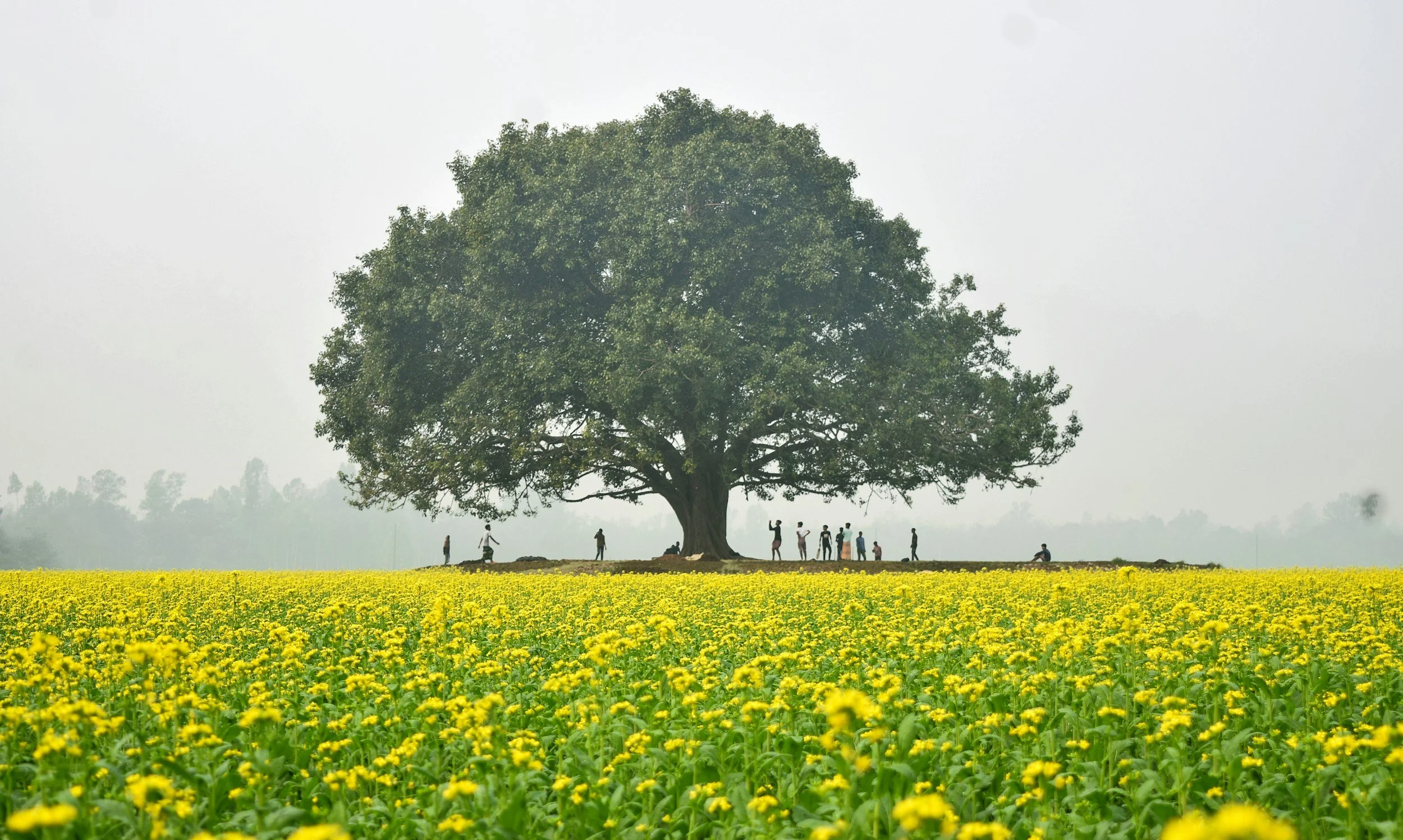
But Jesus did not stop at the seed. He pointed to what it becomes. The mustard plant grows large enough to attract birds of the air! This is a picture of a life so shaped by the kingdom that others are drawn to it. People who are not yet part of the community come near because something in that life is attractive to them.
The Parable of the Yeast: Why Does the Gospel Spread Quietly?
Yeast does not announce itself. You cannot watch it work in real time. But a small amount mixed into a large batch of flour will cause the entire thing to rise. It is potent. It is effective. And it works from the inside out.
This is how the gospel moves. It spreads in ways that are not always visible at first. It works quietly within a person, within a family, within a community. And then, at some point, the evidence becomes undeniable.
The Parables of the Hidden Treasure and the Pearl: What Happens When You Find It?
Once the seed has been planted and the yeast has begun to work, something shifts. A person begins to search. They want more of what they have tasted. They are willing to give up a great deal to have it.
Jesus described a man who finds treasure hidden in a field and, in His joy, sells everything He has to buy that field. He described a merchant who finds one pearl of great price and sells all that he has to obtain it. These are not pictures of reluctant sacrifice. They are pictures of joyful pursuit.
"Again, the kingdom of heaven is like a merchant in search of fine pearls, who, on finding one pearl of great value, went and sold all that he had and bought it." - Matthew 13:45-46 English Standard Version (ESV)
This is what happens when someone goes on a mission trip and comes back changed. It is what happens when someone joins a Bible study and discovers real community for the first time. It is what Peter experienced on the Mount of Transfiguration when he saw Jesus speaking with Moses and Elijah and wanted to stay there. When you find the pearl, you do not want to let it go!!
The Parable of the Net: Is There a Final Judgment?
The final image Jesus offered is a large net cast into the sea, catching every kind of fish. Everything is hauled in. And then there is a sorting. The angels come and separate those who are saved from those who are not.
This parable does not allow for a comfortable universalism. There is judgment at the end of the story. The kingdom of heaven is both justifying, in that it saves, and it calls us to take seriously the reality that not everyone who is gathered will remain.
This is not meant to produce fear but to produce urgency. The net catches everything. The question is whether we are living in light of what comes next.
How Are These Parables Connected?
These five images are not random. They tell a single story in sequence.
It starts small, like a mustard seed.
It spreads quietly, like yeast in flour.
It causes a response, like finding hidden treasure.
It becomes worth everything, like a pearl of great price.
It ends in judgment, like a net pulled from the sea.
Together, they describe the full arc of life in the kingdom of heaven, from the first small experience of grace to the final accounting before God.
Where Are You in These Parables?
This is the most important question. Are you at the mustard seed stage, where something small has been planted and you are not yet sure what to make of it? Are you in the yeast stage, where something is working in you that you cannot fully explain? Are you searching, hunting for the treasure, hungry for more?
The kingdom of heaven is both a gift and a call. It saves, and it sanctifies. It does not invite us to find a comfortable place and stay there. It calls us deeper, always deeper, always trading in lesser things for the pearl of great price.
And it calls us outward. The mustard plant does not grow for its own sake. It grows until it becomes a place where others want to live. The question is not only whether we have received the kingdom but whether our lives are attractive to those who have not yet found it.
Life Application
This week, consider the people in your life who have not yet encountered the kingdom of heaven. Your life, shaped by the gospel, is meant to be like that mustard tree. It is meant to be the kind of place where others want to come and rest.
The challenge is this: identify one person in your life who may be searching, and intentionally create space for them this week. Invite them to a meal. Have a conversation. Let the seed that has been planted in you become visible to someone who needs to see it.
Ask yourself these questions as you go:
Where am I in these parables right now? Am I still at the mustard seed stage, or have I been sitting still for too long?
Is my life genuinely attractive to people who do not yet know Christ? What would they see in me that would draw them closer?
What am I holding onto that I have not yet been willing to sell for the pearl of great price?
Am I living with an awareness that there is a final judgment, and does that shape how I spend my time and relationships?
The kingdom of heaven starts small. But it is meant to grow. Let it grow in you, and let it grow through you.
Be blessed, Travis +